


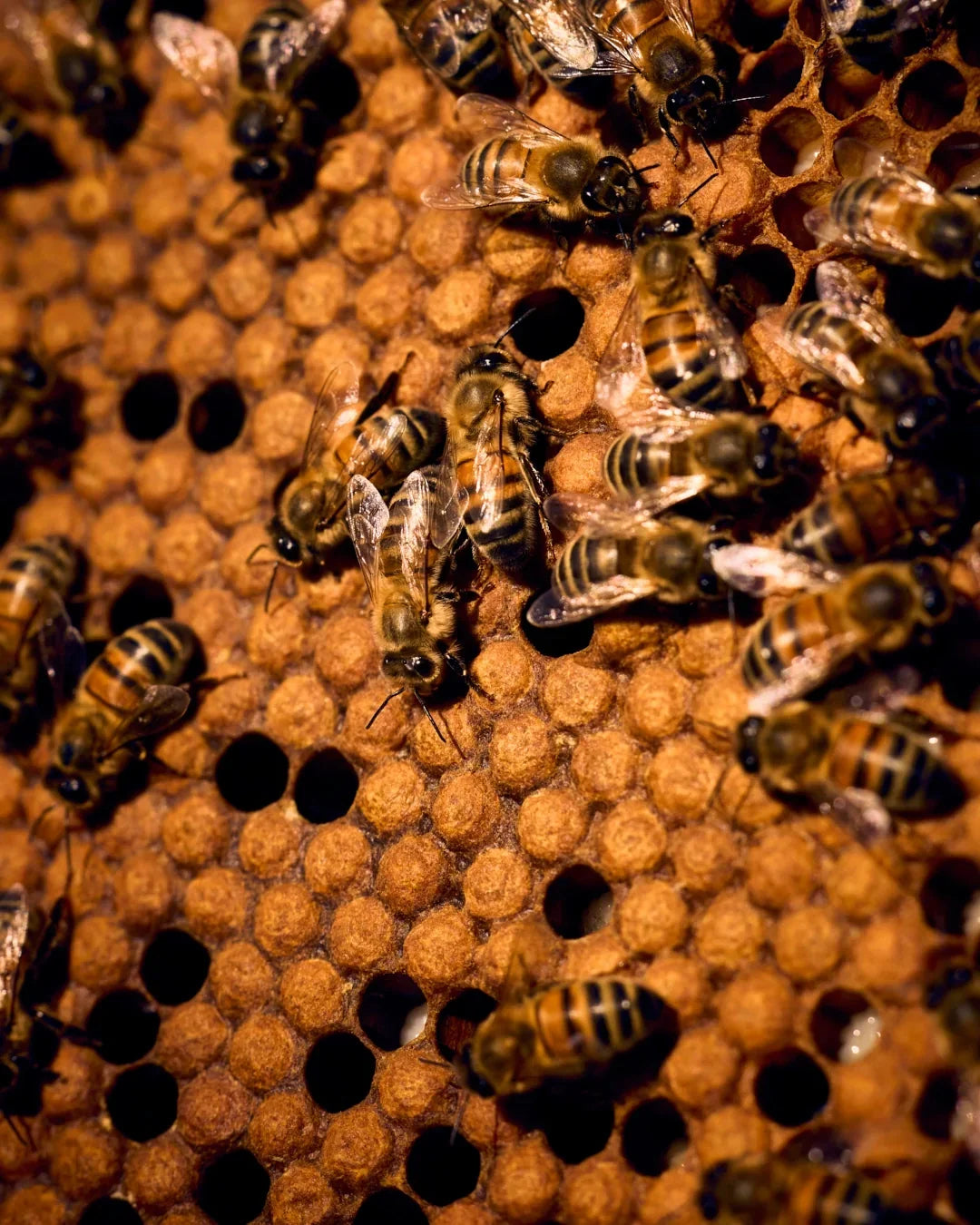
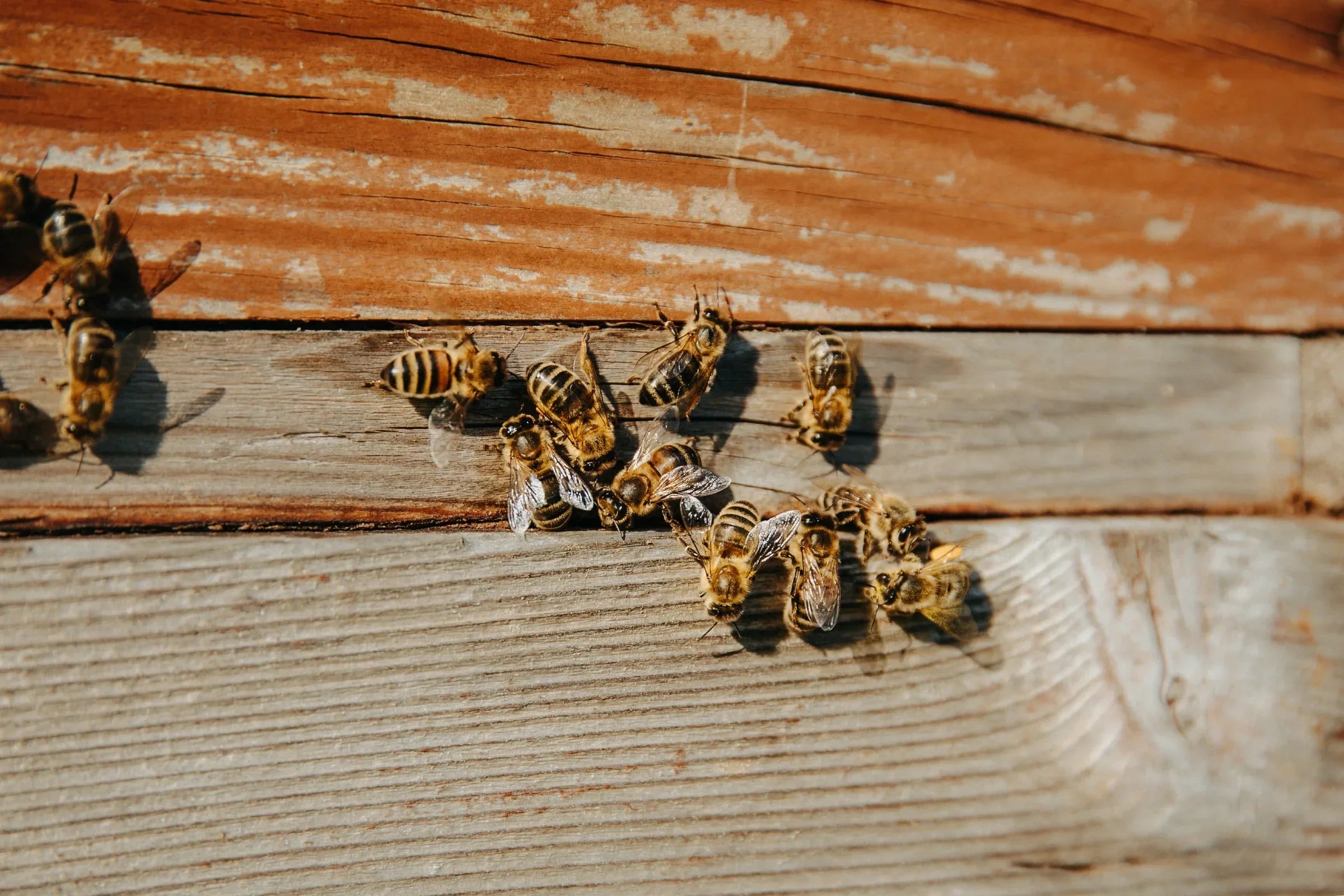
Bees are behind every bottle of Hive Mind Mead, but most of us know surprisingly little about the insects doing all the hard work. From lifespan to anatomy, here are seven bee facts that might just change how you see them.
1. How Long Do Bees Live?
It depends entirely on their role in the hive. Worker bees, the female bees who forage, build comb, and care for larvae, typically live just 5–6 weeks during the busy summer months, working themselves to exhaustion for the ben Winter-born workers, who do less flying and foraging, can live several months. The queen bee, by contrast, can live 2–5 years, laying up to 2,000 eggs a day at her peak. Male bees, called drones, have the shortest job description and a correspondingly short life, usually just a few weeks, as their sole purpose is to mate with a queen. They do this by everting their endophallus (kinky!) which brings about their immediate death on the point of orgasm. (happy but sad).
2. What Do Bees Eat?
Bees have a simple but effective diet: nectar and pollen. Nectar, collected from flowers, provides carbohydrates and energy, while pollen supplies protein and fat, especially important for feeding developing larvae. Worker bees convert some of that nectar into honey, which the colony relies on as a stored food source through winter and lean periods when flowers aren't blooming.
3. Do Bees Hibernate?
Not exactly, though it can look that way. Honeybees don't hibernate individually; instead, the whole colony clusters together inside the hive through winter, vibrating their flight muscles to generate heat and keep the queen and cluster warm, often maintaining temperatures well above freezing even in the depths of winter. They wont fly in temperatures below 10 degrees C. They survive on stored honey during this time. Bumble bees are different: only a newly mated queen survives winter, hibernating alone underground while the rest of her colony dies off in autumn.
4. How Many Bees Are in a Hive?
A healthy honeybee hive can house anywhere from 20,000 to 65,000 or more bees at its summer peak, making it one of the most densely populated insect societies in nature. That number drops significantly over winter, when the colony shrinks down to a core cluster, sometimes just a few thousand bees, focused purely on survival and maintenance until spring. Read our tips for successful beekeeping in spring.
5. How Many Wings Does a Bee Have?
Four. Bees have two pairs of wings, a larger forewing and a smaller hindwing on each side, which hook together in flight using tiny structures called hamuli. This lets the wings function as a single, larger surface, giving bees the lift and agility they need despite their small size.
6. How Many Legs Does a Bee Have?
Six, like all insects. Bees put their legs to remarkable use beyond just walking: their hind legs feature special structures called pollen baskets (corbiculae), which they use to carry pollen back to the hive, sometimes carrying loads nearly equal to their own body weight.
7. How to Recognise a Queen Bee
Spotting the queen among tens of thousands of workers takes a practiced eye, but there are clear giveaways. She's noticeably longer than worker bees, with a more elongated abdomen that extends past her folded wings. Her movements tend to be slower and more deliberate, and she's usually surrounded by a small entourage of worker bees tending to her, feeding and grooming her as she moves across the comb. Many beekeepers also mark their queens with a small dot of paint for easy identification, although we don't tend to, as we believe this practice makes it harder to spot an unmarked queen. She really doesnt like daylight, as in nature if she is outside the hive, she will feel vulnerable to predation, so when we look for the queen, she is usually in the darkest corner of the hive.
Bees Behind Every Bottle
Every fact above ties back to the same thing: bees are extraordinary, and their hard work is the reason mead exists at all. At Hive Mind Mead, we're proud to celebrate that. Explore our Beekeeping page to learn more about the hives behind our honey. If you'd like to learn more bee facts, take a look at our blog on the 10 bee facts you probably didn't know.




Share: